


The traditional concept of a “castle and moat” security strategy has become entirely obsolete in our hyper-connected digital landscape. In the past, organizations focused heavily on defending the perimeter, assuming that anyone inside the internal network could be trusted by default. However, the rise of sophisticated insider threats and the transition to decentralized cloud environments have proven that “trust” is actually a major vulnerability. Advanced Zero Trust Network Architecture (ZTNA) is the modern answer to this crisis, operating on the core principle of “never trust, always verify.” This framework assumes that a breach is always imminent or has already occurred, regardless of whether a user is connecting from a corporate office or a remote coffee shop.
By implementing ZTNA, enterprises are shifting their focus from protecting a physical location to protecting individual data assets and applications. This transition requires a massive overhaul of how identity is managed, how traffic is encrypted, and how access is granted across the entire digital ecosystem. This guide will explore the deep technical components of Zero Trust, the psychological shift required by IT teams, and the strategic steps for a successful deployment. As we move deeper into an era of persistent cyber warfare, understanding Zero Trust is no longer optional for any business that values its digital survival.
Core Principles of Zero Trust Philosophy
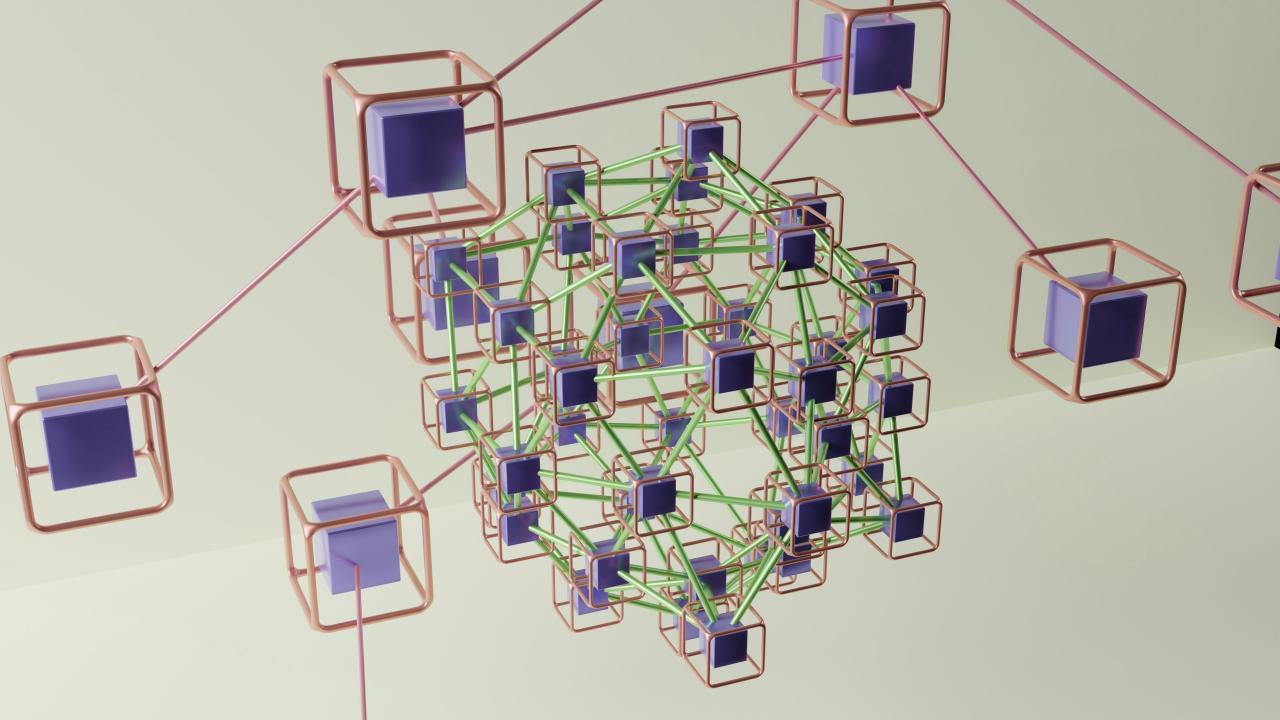
Zero Trust is not a single piece of software but a comprehensive security philosophy that dictates every interaction within a network.
A. Explicit Verification Protocols
Every access request must be authenticated and authorized based on multiple data points. This includes user identity, physical location, device health, and the sensitivity of the resource being accessed.
B. Principle of Least Privilege (PoLP)





Users are granted the absolute minimum level of access required to perform their specific job functions. This prevents “lateral movement,” ensuring that if one account is compromised, the attacker cannot hop to more sensitive systems.
C. Assumption of Breach Mentality
Engineers must design systems as if an attacker is already present in the environment. This leads to the implementation of constant monitoring and micro-segmentation to minimize the potential blast radius of a security incident.
The Role of Micro-Segmentation in Network Defense
Micro-segmentation is the tactical process of breaking a network into small, isolated zones to maintain granular control over traffic.
A. Defining Security Perimeters around Workloads
Instead of one big firewall for the office, micro-segmentation puts a tiny firewall around every individual application and database. This ensures that a vulnerability in a web server does not lead to a breach of the payroll database.
B. Lateral Movement Prevention
By restricting east-west traffic—traffic moving between servers inside a data center—organizations can effectively trap an intruder in a single segment. Without the ability to move laterally, the attacker’s impact is severely limited.
C. Software-Defined Perimeter (SDP) Technology
SDP creates a “black cloud” around resources, making them invisible to unauthorized users. A user only sees the specific applications they are allowed to use, significantly reducing the attack surface.
Identity and Access Management (IAM) Evolution
In a Zero Trust world, identity is the new perimeter, making IAM the most critical component of the security stack.
A. Multi-Factor Authentication (MFA) Requirements
Traditional passwords are no longer sufficient to prove identity. ZTNA requires at least two or three layers of verification, often including biometrics or physical security keys.
B. Adaptive and Risk-Based Authentication
Modern systems analyze the “risk score” of a login attempt in real-time. If a user logs in from an unusual location at 3 AM, the system may trigger additional security challenges or deny access entirely.
C. Privileged Access Management (PAM)
Admin accounts are the “keys to the kingdom” and require extra layers of scrutiny. PAM systems record every action taken by an administrator, providing a detailed audit trail for compliance and security.
Continuous Monitoring and Real-Time Analytics
Zero Trust requires a shift from static security checks to continuous, real-time observation of all network behavior.
A. Security Information and Event Management (SIEM)
SIEM platforms collect and analyze logs from every corner of the network to find patterns of malicious activity. In a Zero Trust environment, the SIEM is the central hub for automated threat detection.
B. User and Entity Behavior Analytics (UEBA)
AI models are trained to understand the “normal” behavior of every user and device. When a device starts sending massive amounts of data to an unknown IP address, the system can automatically cut off its connection.
C. Automated Incident Response Orchestration
When a threat is detected, Zero Trust systems can trigger automated “playbooks” to isolate the infected device. This reduces the “dwell time” of an attacker from days down to seconds.
Securing the Remote Workforce with ZTNA
The shift to remote work has accelerated the adoption of Zero Trust as traditional VPNs struggle to provide adequate security.
A. Eliminating VPN Vulnerabilities
VPNs often grant broad access to the entire network once a user is connected, which is a disaster for security. ZTNA provides a direct “tunnel” only to the specific application the user needs, keeping the rest of the network hidden.
B. Device Health and Compliance Checks
Before a remote laptop can connect, the system checks if its antivirus is updated and its disk is encrypted. If the device is found to be “unhealthy,” it is denied access until the issues are resolved.
C. Secure Access Service Edge (SASE)
SASE combines Zero Trust network access with wide-area networking (WAN) capabilities. This allows remote workers to have fast, secure connections to cloud applications without passing through a central office.
Data Protection and Encryption Strategies
Within a Zero Trust framework, data must be protected both while it is moving and while it is stored.
A. End-to-End Encryption (E2EE)
Traffic must be encrypted from the moment it leaves the user’s device until it reaches the final server. This prevents “man-in-the-middle” attacks where hackers intercept data on public Wi-Fi.
B. Data Loss Prevention (DLP) Integration
DLP tools monitor files for sensitive information like credit card numbers or social security codes. If a user tries to move a sensitive file to an unauthorized cloud drive, the Zero Trust system blocks the action.
C. Data Tagging and Classification
Not all data is created equal; some is more sensitive than others. Zero Trust systems use metadata tags to apply stricter access rules to “Top Secret” files compared to general office memos.
Challenges in Zero Trust Implementation
Transitioning to a Zero Trust architecture is a massive undertaking that comes with significant technical and cultural hurdles.
A. Legacy System Compatibility
Older hardware and software often lack the ability to support modern identity protocols or micro-segmentation. Organizations must use “gateways” or “proxies” to bring these legacy assets into the Zero Trust environment.
B. Complexity and Management Overhead
Managing thousands of granular access rules can quickly become overwhelming for IT staff. Automation and centralized management consoles are essential to prevent “rule fatigue” and human error.
C. User Experience and Friction
If security is too difficult, users will find ways to bypass it. The goal of ZTNA is to make verification as invisible as possible, using “seamless” technologies like single sign-on (SSO) and biometric prompts.
The Role of Artificial Intelligence in Zero Trust
AI and machine learning are the “brain” of the Zero Trust architecture, handling the immense volume of data required for verification.
A. Predictive Threat Modeling
AI can predict where an attacker might strike next based on global threat intelligence. This allows the Zero Trust system to preemptively harden specific network segments.
B. Automated Policy Generation
Analyzing user behavior allows AI to suggest the best access policies for different departments. This reduces the manual workload on security engineers and ensures rules are based on actual usage patterns.
C. Detecting Anomalous Traffic Patterns
AI can spot microscopic changes in network traffic that would be invisible to a human eye. This is the only way to detect “low and slow” attacks where hackers try to exfiltrate data over several months.
Zero Trust and the Cloud Transformation
As businesses move their workloads to AWS, Azure, and Google Cloud, Zero Trust becomes the primary way to manage multi-cloud security.
A. Identity as the Shared Plane
By using a central identity provider, an enterprise can apply the same Zero Trust rules across all its different cloud providers. This creates a consistent security posture regardless of where the data sits.
B. Securing Cloud-Native Applications
Containers and serverless functions require a unique type of Zero Trust protection. Security policies are “injected” directly into the code, ensuring the application is protected from the moment it is deployed.
C. Managing Third-Party and Vendor Access
Zero Trust allows you to give a consultant or vendor access to one specific project folder without letting them see anything else on your network. This is the safest way to collaborate in a global economy.
Compliance and Regulatory Alignment
Zero Trust is increasingly becoming a requirement for various international data protection regulations.
A. GDPR and Data Privacy Compliance
The granular control provided by Zero Trust makes it easier to prove that only authorized personnel have accessed personal data. This is essential for meeting the strict audit requirements of the EU’s GDPR.
B. NIST and Federal Security Standards
The National Institute of Standards and Technology (NIST) has released specific guidelines for Zero Trust (SP 800-207). Following these standards is becoming a prerequisite for any company doing business with the government.
C. PCI-DSS for Payment Security
For companies handling credit card data, Zero Trust provides the “segmentation” required to reduce the scope of a PCI audit. By isolating payment data, the rest of the network does not have to meet the same expensive compliance levels.
Conclusion

Advanced Zero Trust network architecture security is the final and most necessary evolution of digital defense. The days of relying on a simple perimeter firewall to protect valuable corporate assets are officially over. Trust must be earned through continuous verification of identity, device health, and environmental context. Micro-segmentation ensures that a single point of failure does not lead to a catastrophic total network breach. Identity has become the most important boundary in the modern world of remote work and cloud computing. Implementing this framework requires a deep commitment to both technical excellence and a change in corporate culture.
Artificial intelligence is the only tool capable of managing the massive amount of data generated by a Zero Trust system. Remote workers are much safer using ZTNA than they ever were using traditional and vulnerable VPN tunnels. Data encryption at rest and in transit is a non-negotiable requirement for protecting sensitive information. While the transition is complex, the reduction in risk makes Zero Trust a high-value investment for any enterprise. Compliance with global regulations is significantly easier when you have total visibility into your network traffic.
Legacy systems can still be protected by using modern gateways that act as a bridge to the Zero Trust world. The ultimate goal of this architecture is to make security a seamless part of the user’s daily workflow. Automation is the key to managing thousands of granular rules without overwhelming the IT department. Cybersecurity is no longer just a technical issue but a core pillar of modern business continuity and resilience. We must accept that the threat landscape will continue to evolve and our defenses must be even more adaptable. Ultimately, Zero Trust provides the peace of mind needed to innovate and grow in a dangerous digital age.